How a great event host builds a genuine connection with the audience
A strong corporate event host builds energy and rapport with the audience. Learn how stage experience, timing and live interaction shape the success of an event.
By Rewanż team
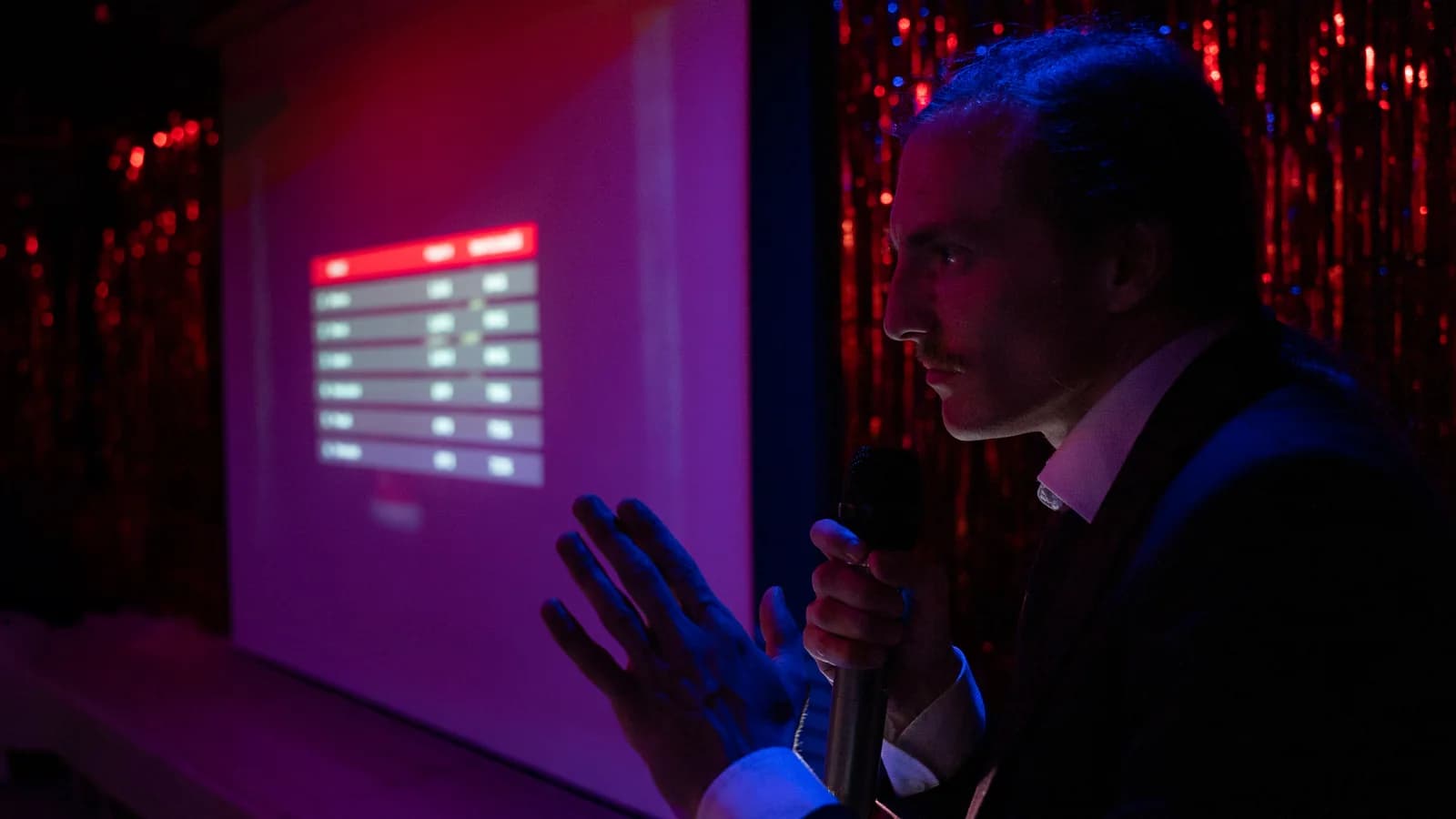
How a great event host builds a genuine connection with the audience
In short: technology, set design and a well-designed game create the foundation of a successful corporate event, but the host turns those elements into a shared experience. Stage and screen experience help a host read the room, adjust the pace and respond in the moment — none of which can be fully programmed into an app or predicted in a script.
You can have the best technology, the most interesting questions and a perfectly designed set - and still have an event that will not captivate the room. The missing element is most often the leader, or more precisely: the difference between someone who reads a script and someone who can actually lead a group of people.
Why the host matters more than the script
1. The energy of the room changes from minute to minute
No scenario can predict everything - a moment of silence after a difficult question, a sudden burst of laughter, a drop in energy after a long round. An experienced leader reads these signals on an ongoing basis and reacts to them: speeds up, slows down, jokes, provokes a reaction. This is a skill that cannot be replaced by any technology.
2. Connecting with the audience is a craft, not improvisation
Film and theatre actors spend years developing these skills: connecting with an audience, sensing pace and directing attention. That craft transfers directly to a corporate event. An experienced host can establish rapport with an unfamiliar room within moments and maintain attention from the first question to the last.
3. The host is the face of the event, not just its voice
Participants may forget individual questions and scores, but they remember the person who guided them through the experience. A host who builds an authentic rapport with the audience — rather than simply reading the next question — becomes an important part of how people remember and evaluate the event.
4. Reaction to unforeseen situations
At a live event, something will always unfold differently from the plan: a technical delay, an unexpected answer or a sudden shift in the room's energy. An experienced host can absorb that disruption in real time and often turn it into one of the event's most memorable moments instead of an awkward interruption.
What this means in practice at a corporate event
That is why Rewanż hosts are experienced film and theatre actors rather than conventional event entertainers. Their role is not merely to read questions from the app. They maintain the room's energy, build genuine contact with participants and respond to the game as a live performance rather than a fixed script.
This is the difference that determines whether the event is remembered as a "pleasant afternoon" or as an experience that the team talks about long after it is over.
Frequently asked questions
Why is the stage experience of the host important at a corporate event? Because it allows him to read the energy of the room in real time and react to it in real time - something neither script nor technology alone, no matter how well designed, can provide.
What is the difference between an actor-host and a standard event animator? Film and theater actors practice building contact with the audience and controlling the group's attention as a craft, which translates into faster establishing relationships with a previously unknown audience and better reactions to unforeseen situations.
Does the host influence how participants remember the entire event? Yes - participants more often remember the person who hosted the event than the questions or scores themselves, which is why the host largely determines the overall evaluation of the event by participants.
What happens when something goes wrong during an event? An experienced host can handle an unexpected live situation and often turn it into one of the event's most memorable moments rather than an awkward interruption.
Want to see how our hosts work with an audience? Ask about a Rewanż event
See also: What is gamification and why it works better than a presentation or workshop · The psychology of competition: why games generate stronger engagement · Behind the scenes: how the game console and live app work
Related articles
attractions for the conference
Conference entertainment: how to engage participants without disrupting the agenda
Read articlecorporate game show
Corporate game show: how it works, how long it lasts and which group sizes it suits
Read articleteam building for 50 people